Showing posts with label Clerical abuse. Show all posts

Thursday, 9 September 2010

Boston Archdiocese: New Accusations Against Priest

BRAINTREE, Mass. (AP) ― A priest cleared by the Boston Archdiocese three years ago of child sex abuse is now facing more accusations.

The archdiocese said Wednesday the Rev. Thomas Curran has been restricted from public ministry following new allegations that he sexually abused children in the 1970s and 1980s.

Curran was on administrative leave from 2002 to 2007 during the archdiocese's investigation of two sexual abuse allegations, which it found were unsubstantiated. Curran was then placed on permanent disability, which restricted his ministry to family. He's now restricted from any ministry. His current location could not immediately be determined.

Cardinal Sean O'Malley said the new charges brought the church "great sadness" and underscored the importance of its efforts to protect children.

SNAP, an abuse victims advocacy group, said the case shows "how extraordinarily flawed" church sex abuse investigations are.

Belgian Cardinal: "Damage Control" Before Concern For Victims

Cardinal Godfried Danneels also acknowledged that "all too often" the Roman Catholic Church had given damage control precedence over concern for victims in sexual abuse cases involving clergy.

Roger Vangheluwe, the Bishop of Bruges, resigned at the end of April after admitting to a paedophile relationship with his teenage nephew n the late 1970s and early 1980s, when he was still a priest.
The victim, according leaked transcripts of a meeting on April 8, was then asked by Cardinal Danneels to keep silent about the abuse until Bishop Vangheluwe retired next year.
The cardinal insisted that he had tried to establish why the family had kept quiet about the abuse for almost 25 years and he denied mentioning the bishop's impending retirement to influence the relatives.
"I never wanted to suggest that it should not be made public," he said.
Cardinal Danneels, who retired in January, has been questioned by police as a witness in an investigation into sexual abuse by the Church in Belgium.
He said that he had only become aware of a sex abuse problem was big after cases emerged in the United States, the Netherlands and Germany.
"We knew of a few cases. But the stream of reactions that came in after Vangheluwe's resignation made the scale of the problem clear, also for me," he said.
Read more at Daily Telegraph

Wednesday, 7 April 2010

Global Abuse: Chile, India.

First, the problem of sexual abuse by the Catholic clergy was seen as just an American problem, then just the Americans, and those priest-ridden Irish. Earlier this year, the world began to realise that it was also a more widespread European problem, with rapidly increasing reports also from Germany, Netherlands, France, Italy, Denmark, Spain, Switzerland, Poland…

The truth of course is that this is no more than just a European problem, any more than it was ever just an American issue. This was just where the news broke first.  There is every reason to suppose that comparable stories wills till emerge from the countries of the South. I have already reported on the first stories emerging from Brazil and a single instance (concerning child pornography) from Chile.  Now, we have more reports from Chile, and one from India.

The first report from Chile concerned a  Spanish teacher, rather than a priest, who was arrested in Chile on charges of filming the sexual abuse of boys. Now, the Catholic archbishop of Santiago has admitted that the Chilean church is investigating “a few”, cases involving paedophilia and the clergy.  He says there are “just a few” cases, for which he thanks God.  So do I – if it remains just a few. The experience from elsewhere, however, is that “just a few”” cases which are known initially, have a habit of growing to a few more as more victims are emboldened to speak up- and the growing trickle then becomes a flood. (Initial reports from Germany were of fewer than a hundred cases. When the hotline opened last week, it handled thousands of calls within the first few days.)

From the Strib:

Roman Catholic archbishop in Chile says 'a few' cases of paedophilia are being investigated

SANTIAGO, Chile - The archbishop of Santiago says the Roman Catholic Church is investigating "a few" cases of pedophilia involving priests in Chile, an issue church leaders long sought to play down. 
"There is something to these pedophilia abuses — just a few, thank God," Cardinal Francisco Javier Errazuriz said in an interview on state television Sunday evening. 
Errazuriz did not say how many cases or whether they had been reported to police. Press representatives of the Santiago diocese told the Associated Press on Monday that they didn't know how many pedophilia cases were under investigation.

Meanwhile, the first report from India does not concern abuse in India, but an Indian priest who is wanted in the USA to face trial over allegations concerning actions when he was based in Minnesota.  The interesting feature about the Indian hierarchy, concerns their response ( or lack of response) to calls for extradition – and how it has changed dramatically in the face of publicity.

When news first broke last week that Fr Joseph Jeyapaul, now working back in India, was wanted to face criminal charges in Minnesota for allegations dating back to 2004 and 2005, there were conflicting claims from the Vatican, which said it had “warned” the Indian Church authorities about Fr Jeyapaul. and from his current diocese, which claimed there was no case to answer, and so there were no plans for him to return to the US.

From the Modesto Bee:
Bishop Victor Balke of the Diocese of Crookston tried three times to alert superiors about a visiting priest accused of raping a 15-year-old girl in 2005. The Rev. Joseph Jeyapaul, a native of India who served in the diocese in 2004 and 2005, returned to India before legal charges were filed. Roseau County authorities are seeking to have him returned to Minnesota to face rape charges. 
Balke wrote his first letter to the Congregation for the Doctrine of the Faith, the office charged with disciplining priests, in December 2005. 
"I cannot in good conscience allow this matter to be passed over because the cleric has left my territory," he said. "In my mind, that would be a shameful act of betrayal towards the women and girls in India to whom Fr. Jeyapaul could at present pose a serious risk."
Five months later, the office responded to Balke that Jeyapaul was being monitored.
"Do you know what being monitored means?" Anderson asked rhetorically. "It means nothing. They are doing nothing.

From the Wall Street Journal
Father Jeyapaul said a 2007 internal church investigation into his 28 years as a pastor in India didn't produce any allegations of sexual abuse. 
Bishop Arulappan Amalraj of the Ootacamund diocese, which conducted the investigation, confirmed that the report contained no allegations, and said in an interview that the Vatican had contacted him in late 2006 and 2007 seeking information on Father Jeyapaul after learning of the allegations in Minnesota. Bishop Amalraj said he sent a report from the inquiry to the Vatican in early 2008.
From Ksax TV Eyewitness News
ST. PAUL, Minn. (AP) - Vatican officials warned church officials in India to monitor a Catholic priest charged with sexually assaulting a 14-year-old girl in Minnesota, but four years later he continues to work in his home diocese. 
In a 2006 letter to the bishop of the Diocese of Crookston, Minnesota, Archbishop Angelo Amato wrote that the Rev. Joseph Palanivel Jeyapaul would be watched in his home diocese "so that he does not constitute a risk to minors and does not create scandal."
Jeyapaul denies the charges and has no plans to return to the U.S. to face the courts. His current bishop says Jeyapaul has a paperwork job in his office and does not work with children.
Latest reports, show that the publicity has made a difference.  four years after the Minnesota bishop first wrote to the CDF, years in which the Vatican wheels moved with typical Vatican speed (i.e., near inaction), suddenly Fr Jeyapaul will, after all, return to the US to face his accusers.  The lessons are plain:  even when the Vatican does indeed “act” to ensure that accused paedophiles  face proper investigation and possible trials, the procedures that they follow are glacially slow.

However, when faced with the full force of publicity, things can change very suddenly. The intense public scrutiny the media are now applying to the Vatican may not be popular with the oligarchy, but it is clearly bringing results, and must continue.

NY Times:

Priest in India Says He’ll Go to U.S. to Face Sex Charges

NEW DELHI — A Roman Catholic priest in southern India charged with sexually assaulting a teenage girl in Minnesota in 2004 said Tuesday that he would return to face the charges, though he and his supervising bishop in India said they did not know about the criminal charges until reporters contacted them.

(If they “did not know” until reporters contacted them, how effective was the Vatican scrutiny? Or has somebody here, either the CDF or the diocese, been somewhat economical with the truth?  )

Monday, 5 April 2010

Arizona: How Canon Law Protected Convicted Abusers

A report from Arizona tells how the late Tucson Bishop manual D Moreno struggled to get authorization from then Cardinal Ratzinger at the CDF to defrock a convicted abusive priest. 
The late Bishop Manuel D. Moreno pleaded with the future pope for help.

In one case, Moreno pleaded with then-Cardinal Joseph Ratzinger, now Pope Benedict XVI, for help in removing the Rev. Michael Teta, who was convicted by the church in 1997 of five crimes including sexual solicitation in the confessional.
"I make this plea to you to assist me in every way you can to expedite this case, because the accused was a priest in whom I had great confidence at one time, but who, unfortunately, worked among our former seminarians, and, terrible to say, evidently corrupted many of them," Moreno wrote in an April 1997 letter to Ratzinger.

The report as published presents yet another case where Pope Benedict, as head of the CDF, was clearly involved in dealing with a clear case of abuse by a convicted priest, but did no intervene to remove him from presenting a continuing danger to children, in spite of pleading and warnings of future abuse from the local ordinary.

Saturday, 3 April 2010

How Many German Abuse Victims? Hotline Crashes After 4400 calls.

Lest anybody be in any doubt that the scale of the abuse problem in Germany compares with that in the US or in Ireland, here is a sobering statistic:  teh hotline set up to take calls from abuse survivors, crashed on its first day in operation, after taking over 4400 calls:

Abuse hotline crashes as 'humiliated' church prays for a new start

AN ABUSE hotline set up by the Catholic Church in Germany crashed on its first day as more than 4400 alleged victims of paedophile and violent priests called to seek counselling and advice.
The handful of therapists assigned to deal with them could not cope with the numbers - only 162 of 4459 callers were given advice before the system was closed.
Andreas Zimmer, the head of the project in the Bishopric of Trier, said he was not prepared for ''that kind of an onslaught''.
The hotline is the church's attempt to win back trustfollowing an escalating abuse scandal that threatens the papacy of German-born Pope Benedict.
....
On the same day as the German hotline opened allegations emerged of serial abuse perpetrated against children by Bishop Walter Mixa - an ally and friend of the Pope - when he was overseeing a Catholic children's home in the 1970s.
The leader of Germany's Catholic bishops said in a Good Friday message that he hoped Christianity's most solemn day would mark a ''new start'' for the church. Archbishop Robert Zollitsch said the time when Christians commemorated the crucifixion of Christ must ''mark a new departure, which we so badly need''.
(Full report from Sydney Mornign Herald)

Dear Pope: Call Me


In fairness to the Pope, there is probably nothing he could have said to the church in Ireland that would be sufficient to bring healing to the thousands of survivors of sexual abuse at the hands of pedophile priests. Too little, too late. I don’t think anyone ever imagined the numbers of victims, the numbers of abusive priests, and the material (not to mention the spiritual) cost facing the Roman Catholic Church. But as the crisis erupts again in Europe and the U.S. with serious questions being raised about the Pope himself, one has to wonder if the men in charge have learned anything in the past 20 years. It would appear not.
If the Vatican were to ask me for advice on how to handle this situation (which they will not), here are my ten steps to justice and healing:
  1. Words are important but actions are the real test. Anyone who knew and did nothing or knew and covered it up should no longer be in a position of authority in the church. Holding individual bishops and administrators accountable would speak volumes.
  2. Stop expecting any sympathy from the flock; you don’t deserve it.
  3. Stop being defensive and complaining that the media coverage is a “pretext for attacking the Church.” You created this problem by not responding to disclosures of abuse and by trying to hide them instead of dealing with them.
  4. Stop empathizing with Bishops who hid the abuse of children because they wanted to protect the church’s reputation. They sacrificed thousands of children and set in motion an institutional failure that now threatens the future of the church.
  5. Come clean and own up to the system’s failures and tell us what you are doing to fix it. Remember: repentance, according to Ezekiel, means to “get a new mind and a new heart.”
  6. Don’t ever use the Gospel passage about the woman caught in adultery when Jesus said that anyone without sin should cast the first stone to discuss any of this. Instead check out Luke 17:1-2: “Occasions for stumbling are bound to come, but woe to anyone by whom they come. It would be better for you if a millstone were hung around your neck and you were thrown in the sea than for you to cause one of these little ones to stumble.” Jesus was serious about accountability; you should be too.
  7. If you are serious, establish a commission to really investigate and recommend structural changes because this is a structural problem. Be sure to include non-bishops and non-Catholics who actually have expertise.
  8. Stop pretending to “protect” the institutional church by hiding from victims and survivors. Your first job is pastoral and they are your flock. All they are seeking is justice and healing, and they have a right to expect both from their church. In fact, your defensive, lawyer-driven responses have placed the institutional church in great jeopardy. You have compromised the integrity of the church and caused many to question their faith.
  9. Remember: they don’t expect us to be perfect, just to be faithful.
  10. “Therefore lift your drooping hands and strengthen your weak knees, and make straight paths for your free, so that what is lame may not be put out of joint, but rather be healed.” (Hebrews 12:12)
So Pope Benedict, call me. Let’s chat.

Wednesday, 24 March 2010

Michael Walsh on the Vatican’s Problem: Abuse and Renewal

At Open Democracy, there is one of the clearest analyses of the problem in the  Vatican that I have yet seen. Here are some extracts
There are many reasons given for the imposition of celibacy on (the majority of) Catholic clergy, an obligation with a long and problematic history. Some of these reasons are practical, others ascetical, but there are good arguments for claiming that celibacy was originally imposed to mark off clergy as a separate caste within an increasingly Christian society. That was a long time ago, but the “caste” mentality survives to this day.
It is not true, of course, for all Catholic clergy, many of whom are well adjusted human beings, but it is true for some that they socialise almost entirely within clerical circles. ..... There is, in other words, a distinctive clerical culture which celibacy has an obvious role in maintaining. In their daily lives they are not challenged by wives or children.
The most deleterious aspect of this culture is the assumption by the clergy of the mantle of authority and the power they assume goes with it. It is insidious. It is exercised without reflection. It used to have some kind of basis in the better education clergy enjoyed, but that distinction is now gone. Their parishioners rightly show reverence to an ordained minister, but that is exploited. It is exploited unthinkingly in many minor ways, but it is also exploited by some in their abuse of women and of children. They are in a position of power bestowed on them by the church’s law, and they make use of that power for their own ends, sometimes immoral ones. Not all, of course, do so, not even most, but enough have done so in so many different countries of the world (clerical culture is a global phenomenon) that they have brought about the greatest crisis in the Catholic church since the 16th-century reformation. And just as in the 16th century, the Vatican is floundering.
The problem with the Vatican is that it shares this clerical culture, and to excess. There is a pious belief among Catholics that the Vatican is run by the best clerical civil servants the church can produce. It isn’t. With some few exceptions it is staffed by people who have drifted into their jobs by inertia, because they happened to be in Rome, or because they wanted to be close to the source of power in the church. And they regard that power as untouchable, answerable to no one under God. There was a canonical phrase, much beloved by medieval canonists, that the pope may be judged by no one. Papal power has in fact waxed and waned, but at the moment it is at its height. The so-called Magisterium - or teaching authority to which obeisance is demanded and is widely made - dates (in its present incarnation) only from the mid-19th century. It is a new thing, but no one except academics seems ready to question it.
And it is no longer limited only to the papacy. It has been extended to the Vatican offices, the “congregations”, tribunals and committees that make up the administrative structure of the Catholic church. This is a nonsense, but again it goes unquestioned. The Vatican does what it likes. It is imposing a new and unwelcome (by many if not by most) English translation of the liturgy. It is attempting to attract back into the fold the highly reactionary Society of St Pius X which went into schism as a result of the Second Vatican Council. It has, apparently without consulting even those in the Vatican charged with ecumenical matters, made an offer to dissident Anglicans to reunion, which has caused embarrassment to the English Catholic bishops and irritation to their Church of England counterparts.
The publication in 1968 of the encyclical Humanae Vitae banning artificial means of birth-control was the turning-point - in two ways. First, the pope of the day, Paul VI, rejected advice from a reasonably representative committee of Catholics, both lay people (including a married couple) and clerics. Had he not done so, and quite irrespective of the decision reached, it would have been a potent symbol of consultation within the people of God. Second, after initial heartsearching the ban was in any case widely ignored by Catholics. This seriously undermined papal authority. Pope Paul was aware of the danger, and never issued another encyclical. Pope John Paul II and his successor tried to make the acceptance of their interpretation of papal authority on these matters the test of one’s Catholicity. It hasn’t worked. Catholics haven’t necessarily left the church in droves, though many have indeed ceased to practice. They are simply paying less and less attention to Rome.
The Vatican is helpless in the face of the current abuse scandals because it shares the same mindset, the same clerical culture, that gave rise to it. It recognises such abuse as a scandal, but wants to contain it within the ranks. It acknowledges the moral failings of some of its clergy, but has for too long failed to insist that such behaviour is not only sinful but it is a crime. The letter of Pope Benedict XVI to the church in Ireland at last acknowledges that priests guilty of paedophilia must answer to the civil, as well as to the ecclesiastical, authorities (see “Pastoral letter of the Holy Father...”, Bollettino, 20 March 2010). That is an important step from a man who, as Cardinal Joseph Ratzinger and in charge of the Congregation for the Doctrine of the Faith, appeared to want to keep these accusations secret within the bosom of the church. But who does he blame for this scandal? The modern world, and the misinterpretation of Vatican II. His remedy? Just more old-time religion.
After the crisis of the reformation the Vatican survived, oddly enough with its prestige enhanced, for two reasons. A reforming council was called, the Council of Trent (1545-63); and there was an extraordinary renewal of the men at the top. The modern church has had its reforming council, Vatican II. It has not yet had the renewal of the men at the top. This is long overdue - and some women would be a start.

Sunday, 21 March 2010

Benedict's Pastoral Letter: More Questions than Answers

Was a "pastoral letter" the appropriate response in the first place?

Since its release yesterday, I have read the full letter, as well as assorted summaries and commentaries, by churchmen, journalists and victims' groups.  Reflecting on it, I simply come up with more questions than answers - so many, in fact, that I propose to respond not in a single post, but in a series.  Yes, there are other useful things I could be writing about, would prefer to be writing about: I am bursting to get down some posts which elaborate on James L'Empereur's  ideas of the charism and spiritual gifts of gay spirituality,  and on what (global) history has to say about the family, sex and natural law, for instance.  but this response to the greatest crisis facing the church in recent history is so important, that other issues will have to wait.  I ask for the patience and indulgence of my non-Catholic readers, who may find the whole sordid saga too much to pay attention.

The first and most important question, which I have not seen raised anywhere else, is why on earth should the idea of a pastoral letter even be considered appropriate in the first place? as I look at it, there is a sense in which, unless it contains extraordinary wisdom (and this one patently does not), the very idea simply perpetuates part of the problem.  This point was driven home to me as I read the responses of too many bishops and Vatican spokesmen, which one phrase constantly recurs: the "Holy Father".  Like "pastoral" itself, these words in this context, are misleading and harmful.


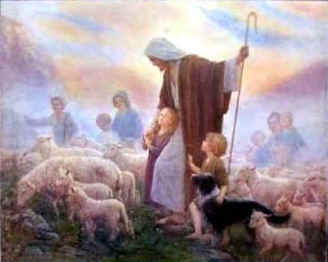
The "Good Shepherd: Jesus Christ, or Benedict XVI?

"Pastoral" of course, is a word widely used in the Church to describe the nature of the relationship between church and people, and is also widely used elsewhere, as in schools.  The problem lies in its hidden connotations.

Tuesday, 16 March 2010

Abuse: German Catholics Unhappy


Papal silence on crisis troubles German Catholics


BERLIN -- German Catholics have called on Pope Benedict XVI to speak out about a stream of sex abuse cases that have shocked the country and plunged the church into its biggest crisis in over six decades.
Pope Benedict has become personally embroiled in the affair, after it emerged that while he was archbishop of Munich and Freising in southern Germany in 1980, a priest accused of sexual abuse in another diocese had been transferred to the area, sent for therapy, and then placed in a parish where he went on to commit other acts of abuse.
The vicar general of the archdiocese from that era has assumed “full responsibility” for the decision, saying there were more than 1,000 priests in Munich at the time and that then-Cardinal Joseph Ratzinger was not informed.
Those close to the pope say that dredging up the case now is the work of ‘vicious elements’ who have long wanted to find a connection between the pontiff and the sex abuse crisis. For example, Italian Archbishop Rino Fisichella, who heads the Pontifical Academy for Life in Rome, called attempts to “draw in” Benedict XVI to the crisis a “sign of violence and barbarity”.
As German Catholics ask to what extent the pope might have known about specific cases of abuse, the affair is likely to cast a shadow over celebrations next month to mark the fifth anniversary of the election of the first German to the papacy in 500 years.

Friday, 10 July 2009

The Myth of Priestly Celibacy

Until the 12th century, Christian priests led sexual lives resembling those of lay people: some priests and lay people alike embraced voluntary celibacy,  others did not.  Then, at the First Lateran Council of 1123 ,  celibacy was imposed as a rule on all priests. The circumstances and reaction at the time are interesting.  John Boswell argues that among the groups strongly promoting the rule were priests who had no wives or concubines, but did have boyfriends.  After noting that Pope Leo IX, who was the first pontiff to take action against married clergy, had shown no interest in acting against homosexual practices by priests or bishops, Boswell continues with:


"Contemporaries, at least, were quick to note that gay priests were more willing than heterosexual ones to enforce prohibitions against clerical marriage";


and again


"There is some evidence of a power struggle between gay and married clergy over whose predilection would be stigmatized."


In the Eastern church, orthodox priests never adopted the rule, and were horrified by the practice in the West. An anonymous Byzantine tract of c 1274, quoted in Judith Herrin's "Byzantium", asks plaintively,


"Why do you priests not marry?... The Church does not forbid the priest to take a wife, but you do not marry.  Instead you have concubines and your priest sends his servant to bring him his concubine and puts out the candle and keeps her for the whole night."


In the centuries that followed, this charge (that clergy at all levels  no longer married, but continued active sexual lives with concubines) was widely accepted. Indeed, sexual scandals even at the level of the papacy were one of the factors that led to the Reformation.   Somehow, in subsequent centuries, many Catholics seem to have adopted the belief that since celibacy is the rule, it is now also the practice.  This is hogwash.  It never has been, and never will be.


It is well known that there has been a haemorrhaging of good men from the priesthood over the last half century, many of them leaving the priesthood explicitly to marry.   It is delusional to suppose that these men kept themselves sexually chaste until after leaving;  it is equally delusional to suppose that all those who maintained active sexual relationships, left the priesthood.  I myself have a personal friend who left the priesthood only when he 'had to get married' to the religious sister he had impregnated.  Note the sequence:  first he got her pregnant, then he left the priesthood.


In the concluding chapter of his book, "Global Catholicism", Ian Linden writes of the state of the church in the 21st century. One of his sections is titled "The Universal Crisis of the Celibate Priesthood."  Among other damaging effects, he notes:


"The number of Catholic priests worldwide in clandestine , and often exploitative, multiple sexual relationships of different duration and kind has undermined the examplary witness of those freed by celibacy for a lifetime of service.  Promiscuous - and paedophile- clergy have been a disaster for the post-conciliar Church, not to speak of their victims' suffering. Clerical sexual conduct has given rise in many parishes to a myriad of intractable problems. So the moral issue for many lay Catholics in some countries became not whether the priest was failing to keep his vow of celibacy - failure was increasingly taken for granted - but whether he was sleeping with a married woman, failing to care for the children brought into the world, or indeed had more than one sexual partner, in short the degree to which the relationship was socially damaging and individually abusive."


It gets worse.  Referring to the consequences of the emergence of HIV/AIDS, he writes:


"But it soon emerged that one consequence of the pandemic was that promiscuous priests, for fear of infection, were shifting their attentions to the local nuns on the assumption that they would be free of the virus", prompting their Superiors to challenge the bishops, without success, to protect their congregations from predatory clergy.


There is plenty of anecdotal evidence to support these contentions.  In The Future of the Celibacy Debate lies in Africa, not Miami Collen Kochivar-Baker writes about the situation in the Central African Republic, where it seems that bishops and priests for years have been living openly with wives and families:


"Africa News had reported Monday that Archbishop Pomodimo and several priests in his archdiocese would be sanctioned 'for adopting a moral attitude which is not always in conformity with their commitments to follow Christ in chastity, poverty and obedience'."


In Zimbabwe, the otherwise impressive and respected Bishop Ncube has resigned after as sexual scandal.  From Rocco Palma's "Whispers in the Loggia":


"Ncube's resignation was accepted after the 62 year-old prelate was accused of adultery in what, at the time, the archbishop maintained was a "well-orchestrated plan" by Mugabe and his allies to discredit Ncube for his globally-noticed protests of the country's authoritarian rule.


Several months later, the prelate admitted to the affair in a documentary interview." In the same post, Pollo  also refers to situation in Bangui.


There have been many instances publicised in the West (and many more unpublicised), of which  the case of Fr Mario Cutie in Miami is just the most recently prominent.    Nor have the sexual partners been restricted to women.   Censor Librorum at Nilhil Obstat has written on the voracious sexual appetite of the late Cardinal Spellman for young men, and former Milwaukee archbishop Rembert Weakland has recently come out publicly on his experience as a gay Bishop in the church.


A  sexual appetite is a fundamental human urge. Modern research shows clearly that healthy, active expression of this urge contributes to physical and mental health. While I fully accept that voluntary celibacy is entirely possible and acceptable for those who embrace it willingly in maturity, I have grave misgivings about imposing it by compulsion.


The pretence of priestly celibacy is not just a myth:  the consequences are intensely damaging, in many ways, to the whole Church and its people.  I will expand on these consequences later.

Wednesday, 8 July 2009

Clerical Abuse: The Story So Far, Looking Ahead.

For a long time I resisted writing about the assorted scandals of clerical sexual abuse from around the world.  After the Irish Ryan report though, I broke my silence, writing for the first time of own experiences, which I presented as just a preamble, declaring my interest, and promised more. You may be wondering what has happened to the rest of reflection on the topic.

In fact, the theme is far from forgotten or neglected, occupying a great deal of my thinking time - and the more I think about it, the wider the scope becomes.  It may not be immediately obvious, but a good portion of what I have written over the past few weeks is part of the argument I am developing.  (Indeed, it could be stated that almost everything I put onto this site is part of my argument - but that is jumping rather too far ahead.)

For now, I would just like to restate what I have published this far and how it fits in to the bigger picture. Then, I will point to the material which is in preparation, and an outline of where I am headed.

Starting from the beginning:  I wrote earlier of the  reasons for my initial silence :


"1)   This is personal.


2)   The issues are far more complex and multifaceted then press reports, or popular commentary, would lead us to believe.


3)  Too often, those attempting to spell out in honesty the complexities and subtleties of the issues, are simply branded as apologists for evil."


Of these three, I have fully explained the first, and there is nothing more to be said.  (If you missed this little personal memoir, you may see the two posts combined on the page "Sexual Abuse: My Experience" ).  Of the third, I think it will be clear by the end that I am anything but an apologist.

It is the second item, the many facts of the issue, that is the problem. This very complexity leaves me having to spin out what is far too often presented in a few glib sentences  and stock phrases over many posts, slipping into what appear to be unrelated digressions.  They are not unrelated at all.

Some of you may have seen my earlier post some months back on Bishop Geoffrrey Robinson's book, "Confronting Sex and Power in the Catholic Church", in which he argues that the three primary causes of clerical sexual abuse are sexual immaturity in some individual priests; enforced celibacy; and excessively centralised power structures in the church.

It was because enforced celibacy is central to the problem, that I wrote about the Myth of Priestly Celibacy.  I will follow this up shortly by expanding on how enforced celibacy leads to abuse.  (My recent items on coming out were not only because they were appropriate to Pride week: they were also important because sexual honesty is crucial to mental health, and so key to this discussion). It will also be necessary to say more about the problem of excessively centralised power in the church - although it will be obvious to my regular readers that this is something I touch on constantly.

This alone does not deal with the full complexity  of the problem.  I noted when I first wrote about abuse that the language is gravely inadequate to the reality, which is covers a wider range of practices, all lumped together into a single term.  I want to show how the problem is much wider, and there is a sense in which we are all, at some level, victims of clerical abuse of some kind.

Conventional responses to the problem are also in my view grossly inadequate.  Simply pointing fingers at the perpetrators and the Bishop who covered up the scandal, attempting to make amends with financial payouts, does not even scratch the surface of the healing process required. Instead, in looking towards a more viable approach, I have been recalling the approach of South Africa in dealing with the appalling atrocities committed in the name of apartheid, or of the "struggle" against it.  Key to this was the Truth & Reconciliation Commission, magnificently led by Archbishop Desmond Tutu.   Dealing with this, and my personal response to the TRC, wil require a short digression into South African history, and to some reflection on the concept of truth.

Only then will I finally be able to present my full conclusions:

  • A full understanding of the problem of clerical abuse will show that at some level, we are all victims;
  • By allowing the church to persist in the exercise of excessive power, and to pervert the truth for a twisted sexual theology, we are all at some level complicit, and share to some degree in the blame;
  • But by simply getting on with our lives, by ignoring those parts of sexual doctrine which are obviously untenable, by showing more sensitivity and compassion in our local parishes than the institutional church does in its documents , and by speaking up vigourously against abuse (of all kinds) wherever we encounter it, we are also, thankfully, already part of the solution.  By asserting our right of participation as formulated at Vatican II, creating if necessary our own structures and forums to have our vocies heard, we can extend still further this healing.

I hope you will stay with me as I elaborate this argument in the weeks ahead.

Tuesday, 17 February 2009

Church, Power & Abuse

Depressing church news over the past two months has led me to pick up and start reading a book which has been on my shelves some time, but which I have previously only dipped into.  The removal of  excommunication of SPXX  members has received wide and ongoing publicity; clerical sexual abuse is again in the news with the FBI reopening old investigations in LA Diocese, and fresh revelations over   Fr Marcial Maarciel Delgado of the Legionnaires of Christ.  Meanwhile, on the progressive wing of the church, there has been less coverage in the MSM of the silencing or excommunication of the priests  Fr Roger Haight,  Geoffrey Farrow and Roy  Bourgeois, or of bizarre goings-on in the parishes of St Mary's, Brisbane and St Stephen's, Minneapolis, where attempts to muzzle complete parishes have led to resistance (St Mary's) or exodus (St Stephen's).

What all these have in common is that they are concerned with power in the church - its extension, its abuse, or attempts to defy or resist it.  so I picked up again  "Confronting Power & Sex in the Catholic Church", by Bishop Geoffrey Robinson.  I am pleased that I did.  Published in 2007, this book has much to say that is directly relevant to current events. Although I have not yet finished reading, and this is far from a formal review, I have already found much of value that I thought would be worth sharing.


Bishop Robinson was Auxiliary Bishop of Sydney from 1984, and in 1994 was appointed by the Australian Bishops to a position of leadership in the Australian church's response to revelations of sexual abuse.  Following his retirement in 2004, he felt freer in speaking his mind, leading to the publication of this valuable book.

Even in his introduction, he wastes no time in setting out immediately his key thesis, that there are three interlinked causal factors which can lead to sexually abusive behaviour:  an unhealthy psychological state, unhealthy ideas about power and sexuality, and an unhealthy environment or community.  In its institutional structures, argues Robinson, too easily and too often reinforces or even creates conditions that reinforce these unhealthy conditions.  It is easy enough to see the broad argument as it applies to sexual abuse, about which many others have written, and which I do not intend to elaborate.  But it is the central section of the book where he spells out the nature and expansion of church institutional power, that fascinated me.

In a very brief summary of the history of the papacy, he shows how an institution which began as just one Bishop of a single diocese, albeit a most important one, moved from a position of 'first among equals' to one of dominance.  Even then, for most of two millenia, the role of the Pope was one of guidance and co-ordination, not one of control.  Not until Pius X and the First Vatican Council, with its promulgation of the doctrine of infallibility, did 'the doctrine of universal jurisdiction of of the Pope over every aspect of the Church' become established.    It is against this longer term view of Church history that we need to evaluate Vatican II, which is now attracting so much welcome attention.  Quite contrary to the view of the Lefevbrists and other conservatives in the church,  Vatican II was significant not for overturning tradition, but for seeking to re-establish it.  (This same point was made last week on Bilgrimage, where  William D Lindsay wrote his own helpful piece on the meaning of Church and tradition in the context of the two Vatican Councils.  It is unfortunate that most of us are so conscious of Vatican II and its upheavals, that we lose sight of Vatican I and the many councils before it.)  Helpfully for Pius X and his successors, his attempts to establish universal control were greatly enhanced by the advances in communication technology, enabing him to be quickly informed of events in far flung parts of the world - and to communicate his response, desires and commands as quickly.

What Robinson recommends is not the abolition or destruction of Papal power - he notes that the Protestant faiths which have eliminated central authority ahve seen endless continuing fission within themselves - but a restoration of balance.  A partnership between Pope, the college of Bishops, and laity not only reflects the (unfilled) promise of Vatican II, it also restores the earliest traditions of the Church, reflects established  constitutional principles in secular democracies of a balance of power. The challenge in achieving this restoration in balance is that teh excessive power structures that have been built up are not simply the work of mischievous individual Popes and scheming officials. Rather, tehy have become institutionalised, built right into the 'systme' of Church governance, so that it is unremarkable that the autocratic structures began to re-establish themselves after the immediate enthusiasm following Vatican II.  I have yet to read Bishop's Robinson's views on how this re-establishment of balance is to achieved, but have one thought of my own.

I find it striking that Luther's first great challenge to the abuse of power in the Church, and the unfolding Reformation that followed, were greatly aided and fuelled by the expansion of literacy and publishing, with the demand of the laity for access to the scriptures.  In the preceding centuries, with limited access to literacy, manuscripts and a common literary language, it was inevitable that the Church would retain a virtual monopoly on knowledge in all its forms.  With the widening of access to the tools of learning, it was natural that a widening circle of  laity would demand access to at least some of that.  The church's intransigence led to rebellion, and the the Protestant churches immediately were characterised by an emphasis on reading of scripture by all.

The Catholic Church eventually backed down on this, but still restricted higher studies in theology to priests.  That too has now gone, and today there  are more lay people studying formal theology than seminarians.    The information age, and its rapid expansion of the tools of learning, has now taken access to theology outside the formal classroom.   Knowledge is power.  The expanding blogosphere empowers us all to extend our own knowledge.  The more obvious it becomes that the officials of the curia do not have a monopoly on truth, the more we use the media available to us to voice our response to abuses (as we have witnessed over the last two months), the more obvious it will becomes to those at the top of the power  structures that their 'power' is not after all as absolute as they might imagine.  Then, by the grace of the Holy Spirit, they may at last begin listening as well as pronouncing, and they may again acquire Authority to accompany their power.

Friday, 30 January 2009

Priests, Paedophiles, and Purity.

I generally refrain from commenting on paedophile scandals, inside or outside the church.  But two stories which almost co-incided a few weeks ago have been niggling at me since I encountered them.  Now, in the diocese of LA, clerical misconduct of a sexual kind is once again in the news:  The Wall Street Journal reports the archdiocese is under investigation for failing to report abuse ("in the distant past", retorts teh diocese.).

It was reported earlier that the Church's own investigation into its seminaries has yielded the gratifying conclusion that 'homosexual' activities in seminaries had declined since the crackdown on admitting gay candidates, and that as a result, there was confidence that clerical paedophilia would consequently cease to be a problem.

The second report, published just a short while previously, was of an investigation into clerical training in United States seminaries (of all faiths, not specifically Catholic - but there is no reason to suppose that Catholic institutions are any better than the rest.  Quite the contrary.).  One alarming finding was that the majority of seminaries made no provision at all for basic sexual education.

The implications are breathtaking.  "The glory of God is humans fully alive", St Irenaus teaches us, and sexuality we know is a fundamental part of our humanity, contributing significantly to both physical and mental health.   I have long found it extraordinary that the Catholic Church sees fit to leave the formulation of doctrine on such an important topic to men who as a result of deliberate perosnal choice, either have no direct experience of the subject, or are living double lives in defiance of those vows. This is itself ridiculous.  But I now realise that it gets worse:  not only do these peole have no direct experience of sex, many of them also lack proper professional training in such matters.

Against this background, it is no surprise at all that many priests have developed so poorly in their sexual identities that they have ended up preying on the vulnerable, as is well known.  But what are the chances of parishioners who find themselves troubled by sexual issues, getting psychogically sound advice from their pastors?

It seems to me that the scandal of paedophilia indirectly caused by the church's ill-advised policies may well extend far beyond just the abuse by clerics, but also to a wider, hidden level, of people whose psycho-sexual health myhave been derailed by well-meanng but untrained and incompetent clerical advisors.

Trying to fix the problem by simply driving away from the seminaries those well-adjusted people with the honesty and self-knowledge to acknoweldge their sexuality is craziness, and can only compound, not solve, the problem.